
1. Introduction
Quick Answer: Are store credit cards worth it? Only if you pay the statement in full and never revolve a balance. At the average store card rate, one carried balance costs more than the discount saved. DollarVisor prices that trade using published federal data, and companies cannot pay for placement in our rankings.
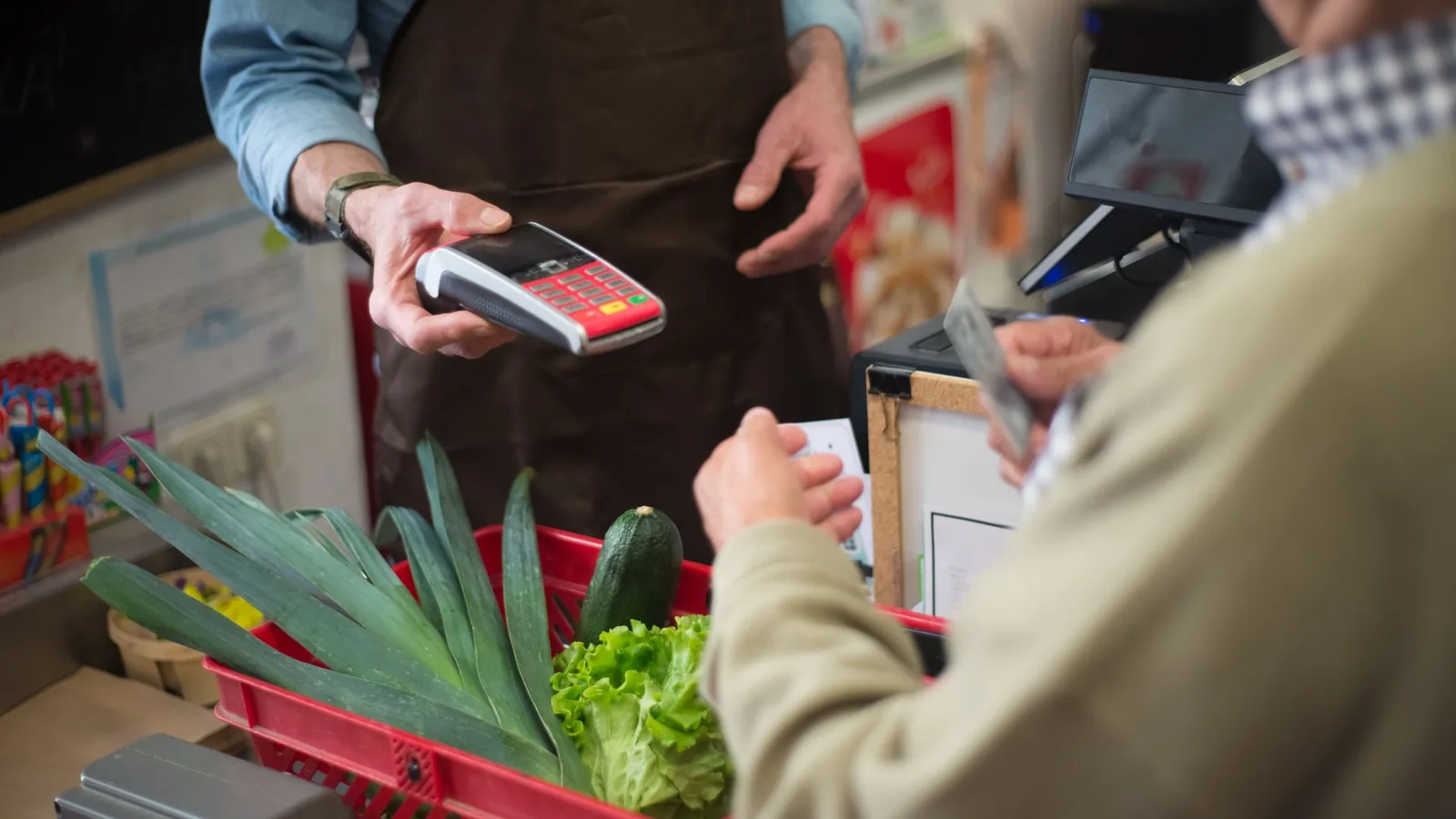
The question gets asked at the register, with a line behind you and fifteen seconds to answer. That is not an accident. About half of all retail card applications are submitted in person, and the checkout window leaves almost no time to read anything.
So this page does the arithmetic for you in advance. We put the real APRs in one table, work out the exact month your sign-up discount disappears, and show what a deferred interest clause does to a purchase you almost paid off. Here is a quick overview before the numbers.
2. What a Store Credit Card Actually Is
Quick Answer: A store card is a bank product with a retailer’s name on it. Two versions exist: a private label card that works only at that chain, and a co-branded card carrying a Visa or Mastercard logo that works anywhere. The rules that matter differ, so check which one you are being handed before comparing it to a regular credit card.
The retailer’s logo is on the plastic, but the retailer is not the lender. Four banks issue more than 80% of store cards in the country: Synchrony, Citi, Capital One and Bread Financial. The store takes a share of the interest and fees those banks collect, and that revenue is real money. Card income averaged 8% of gross profit for the major retailers that disclose it.
- Private label card. Closed loop. It buys things at one chain and nowhere else, and it almost always carries a single fixed APR that does not move with your credit score.
- Co-branded card. Runs on a payment network, so it works everywhere, and it is usually priced by creditworthiness like a normal card.
- Second look card. Offered when you are declined for the main card. It is priced higher on purpose. One retailer’s primary card charges 28.99%, while its second look version charges 35.99% plus a $99 annual fee.
Approval is the easy part. Store card approval rates run 50%, six points above the 44% approval rate on general purpose cards, per the CFPB’s issue spotlight on retail credit cards. Easy approval and high pricing travel together.
Not sure which card you were actually offered?
We rate every major issuer on published terms rather than on the discount they advertise at the counter. See our issuer-by-issuer credit card reviews →
3. What That Sign-Up Discount Is Really Worth
Quick Answer: The discount is worth exactly what it says, once, on one purchase. On a $500 basket, 20% off is $100. That $100 is the entire prize, and everything after it is priced against a rate near 33%, which is why a flat-rate cash back card often wins over a full year.
Sign-up incentives are the reason people open these accounts. The CFPB found the main reason consumers give for opening a store card is a discount or promotion on one specific purchase. Observed offers have run as high as 10% cash back, and one co-brand card led with a $200 gift card.
Compare that to what the card earns afterward. A no-fee 2% card returns $20 on the same $500 basket, every time, at any store, with no new account and no hard inquiry. The store card’s edge is front-loaded into a single transaction.
The discount is a one-time payment. The interest rate is a subscription.
There is a second cost most shoppers never price. Store cardholders often get an ongoing percentage off, which means customers paying with cash or another card effectively pay one to five percent more for the same goods. The discount is partly funded by the people who declined it.
4. Store Card APRs at America’s Biggest Retailers
Quick Answer: Store card rates cluster in the low thirties. New private label cards at the top 100 retailers averaged 32.66% APR in December 2024, and more than 90% of retail cards report a maximum APR above 30%. Rates at the top of the range beat almost every low interest credit card by twenty points.
These are fixed prices, not offers. Because most private label cards skip risk-based pricing, an 800 credit score and a 640 credit score are quoted the same number at the same store.
| Retailer | Issuing bank | Purchase APR |
|---|---|---|
| Big Lots | Bread Financial | 35.99% |
| Petco | Bread Financial | 35.99% |
| Discount Tire | Synchrony | 34.99% |
| J.C. Penney | Synchrony | 34.49% |
| TJX Companies | Synchrony | 34.49% |
| Macy’s | Citi | 33.74% |
| Tractor Supply | Citi | 33.49% |
| Nordstrom | TD Bank | 32.90% |
| Lowe’s | Synchrony | 31.99% |
| Best Buy | Citi | 31.74% |
| Target | TD Bank | 29.45% |
| Ikea | Bread Financial | 21.99% |
Source: Consumer Financial Protection Bureau, Issue Spotlight: The High Cost of Retail Credit Cards, Table 1.
Note the spread. Ikea’s 21.99% and Big Lots’ 35.99% are fourteen points apart for the same product category, so “store card” tells you nothing about price on its own. You have to read the number.
5. What Carrying a Balance Does to a $100 Discount
Quick Answer: Take 20% off a $500 purchase and carry the remaining $400 at 32.66%. You stay ahead for about 19 months, then the interest has eaten the whole discount. At 24 months you are $25 down, and our credit card interest calculator shows the same curve on any balance.
This is the calculation the checkout offer never shows. The discount is fixed at $100. The interest keeps running until the balance is gone, so the only variable that matters is how long you take.
| Months to clear $400 | Interest paid | Relative position | Net vs the discount |
|---|---|---|---|
| Paid in full, month 1 | $0.00 | +$100.00 | |
| 3 months | $10.89 | +$89.11 | |
| 6 months | $27.22 | +$72.78 | |
| 12 months | $59.88 | +$40.12 | |
| 19 months (break-even) | $97.98 | +$2.02 | |
| 24 months | $125.20 | −$25.20 | |
| 36 months | $190.52 | −$90.52 |
Illustrative scenario modeled by DollarVisor at the 32.66% average new store card APR reported by the CFPB. Equal monthly principal steps, interest charged on the balance carried each month, no late fees. Blue bars show money kept, red bars show money lost.
Two things follow from the shape of that curve. Short carries are survivable, and long carries are not. The store card only wins where the balance dies quickly.
Already carrying a store card balance?
Moving it to a lower rate usually beats trying to out-earn a 33% APR with rewards. Compare the five payoff methods →
6. Deferred Interest: the Clause That Bills You Backwards
Quick Answer: Deferred interest means interest is accruing the whole time and only gets charged if you miss the deadline. Miss it by one dollar and the lender bills every month of interest back to the purchase date. The CFPB’s test is the word “if” in the offer, which separates it from a true 0% promotional rate.
The wording does all the work. “0% intro APR for 12 months” is a real zero. “No interest if paid in full within 12 months” is deferred interest, and the CFPB’s guidance on special promotional financing offers tells shoppers to look for that “if.”
These promotions ride on big-ticket items, with an average promotional purchase of $637. The table below models a 24-month promotion at 31.99% where the buyer pays steadily but finishes 4% short. The $4,500 row reproduces the CFPB’s own published example exactly.
| Purchase | Already repaid | Still owed | Back-dated interest | Bill |
|---|---|---|---|---|
| $637 (average promo) | $611.52 | $25.48 | $203.78 | |
| $1,500 (appliance) | $1,440.00 | $60.00 | $479.85 | |
| $4,500 (furniture) | $4,320.00 | $180.00 | $1,439.55 | |
| $7,000 (full room) | $6,720.00 | $280.00 | $2,239.30 |
Illustrative scenario modeled by DollarVisor on the CFPB’s published deferred interest example: equal monthly payments across 24 months at 31.99%, interest recorded on each month’s closing balance and charged in full at the deadline.
Every row costs the same 32% of the original purchase. That is the cruel symmetry of deferred interest: the penalty is sized by what you borrowed, not by what you still owe.
About one fifth of deferred interest promotional balances end in retroactively imposed charges. The fix is unglamorous. Divide the purchase by the number of promo months, pay that amount every month, and ignore the minimum payment, which is usually too small to finish in time.
7. Store Cards vs General-Purpose Cards, Side by Side
Quick Answer: Store cards are easier to get and harder to hold. They price about six points higher, revolve more often, and generate a wildly disproportionate share of late fees. A mainstream no annual fee card loses on the sign-up discount and wins on everything measured after it.
The federal data lets you compare the two products on behavior, not marketing. Every figure below is national and published.
| Measure | Store cards | General purpose | What it means for you |
|---|---|---|---|
| Price of credit | |||
| Average APR, 2024 | 31.3% | 25.2% | Six extra points on every dollar carried |
| Cards priced above 30% APR | 90% | 38% | A cheap store card is the exception |
| Access and behavior | |||
| Application approval rate | 50% | 44% | Easier yes, thinner underwriting |
| Accounts carrying a balance, 2023 | 54% | 48% | More people pay the higher rate |
| Paying only the minimum | 17% | 13% | An early sign of strain |
| Fees | |||
| Share of all accounts | 33% | 63% | Store cards are the smaller group |
| Share of all late fee volume | 46% | 43% | Half the late fees from a third of accounts |
Sources: CFPB Issue Spotlight: The High Cost of Retail Credit Cards; CFPB Consumer Credit Card Market Report, 2025.
Late fees also do heavier lifting in the business model. They make up 25% of what store cardholders pay in interest and fees, against 7% on general purpose cards.
8. When a Store Card Is Actually Worth It
Quick Answer: Say yes when you shop the chain constantly, pay in full monthly, and the ongoing discount beats what your other cards earn there. Say no when you are financing the purchase. If the goal is building credit, a secured credit card does the same job at a fraction of the rate.
The honest case for a store card is loyalty, not credit. A 5% standing discount at a store where you spend $200 a month is $120 a year, which no flat-rate card matches at that one merchant.
- You shop there monthly anyway. The ongoing cardholder discount, not the sign-up offer, is what makes the account pay over time.
- You clear the statement every month. Grace period intact means the APR never touches you, and a 33% rate you never pay is harmless.
- The card is co-branded and priced by credit score. Then it competes with normal cards instead of sitting in the fixed 30-plus band.
- You are financing the purchase. Walk. This is the single most expensive way to borrow at checkout, and a personal loan is usually cheaper for anything over a few hundred dollars.
- The offer is timed to expire. Short promotional windows are designed to stop you from comparing. That pressure is a reason to decline, not to hurry.
One more filter. Store card accounts churn heavily, with annual attrition at 19% against 9% on general purpose cards, so plenty of people open one, use it once and abandon it. An abandoned card still holds a hard inquiry and a fee risk.
Want the discount without the 33% rate?
A flat-rate rewards card earns everywhere and never depends on one chain’s promotional calendar. See how to maximize card rewards in 2026 →
9. What a Store Card Does to Your Credit Score
Quick Answer: Opening one adds a hard inquiry and lowers your average account age, both small effects. The real risk is the credit limit, which is often low, so one purchase can push utilization high. How credit scores work makes the size of each factor clear.
Store cards report to the same bureaus as any other card, so on-time payments help and missed payments hurt in the usual way. The wrinkle is scale. A $600 limit and a $400 purchase puts you at 67% utilization on that account before you have done anything wrong.
Closing the card later is its own decision. It removes available credit, which can raise your overall utilization, so many people keep the account open with a small recurring charge instead. That works only when the card carries no annual fee and no paper statement fee.
10. Our Verdict on Store Credit Cards
Quick Answer: Are store credit cards worth it in 2026? Yes for disciplined regulars at one chain, no for anyone financing a purchase. The discount is a fixed prize of one or two hundred dollars, and the rate that follows is the highest priced consumer credit on the credit card market.
Fewer Americans are taking the offer. The share of consumers holding a store card fell from over 60% in 2015 to 38% in 2024, and private label accounts dropped from 253 million to 161 million over roughly the same stretch.
Our position is simple. Take the discount when you can settle the bill in full that month, decline it whenever the answer involves paying over time, and never sign a deferred interest plan you cannot finish early. Households tightening one recurring cost often find a bigger one hiding in their insurance coverage, where a single overlapping policy can outweigh a year of card interest.
This page is information, not financial advice. See our disclaimer.
11. Frequently Asked Questions
Quick Answer: These cover the payoff case, current store card rates, how deferred interest is calculated, the credit score effect, and whether to close an old account, all using the break-even math applied above.
1. Are store credit cards worth it if I pay in full every month?
Yes, in that case they can be. Paying the statement in full keeps the grace period intact, so the APR never applies and you keep the sign-up discount plus any ongoing cardholder discount. The math only turns against you once a balance rolls into a second month.
2. What APR do store credit cards charge?
New private label cards at the top 100 retailers averaged 32.66% in December 2024, and the average across all private label cards reached 31.3% in 2024. Published rates at major chains run from 21.99% at the low end to 35.99% at the high end.
3. How is deferred interest calculated on a store card?
The lender records interest every month on your promotional balance but does not charge it. If any part of that balance is unpaid at the deadline, all of the recorded interest is added at once, calculated back to the purchase date rather than on what remains.
4. Does opening a store credit card hurt my credit score?
Slightly, and briefly. You get one hard inquiry and a small drop in average account age. The larger effect comes from the low credit limits store cards usually issue, which can push your utilization ratio up fast on a single large purchase.
5. Should I close a store credit card I no longer use?
Not automatically. Closing it removes that credit limit from your utilization calculation, which can lower your score. Keep it open if it has no annual fee, no paper statement fee, and no temptation attached. Close it if the fees or the spending pull are real.
Offered a store card and not sure about it?
Send us the purchase amount, the discount offered, the APR on the application, and any promotional financing terms. We will run the break-even and show the working, with no sponsored placements.