
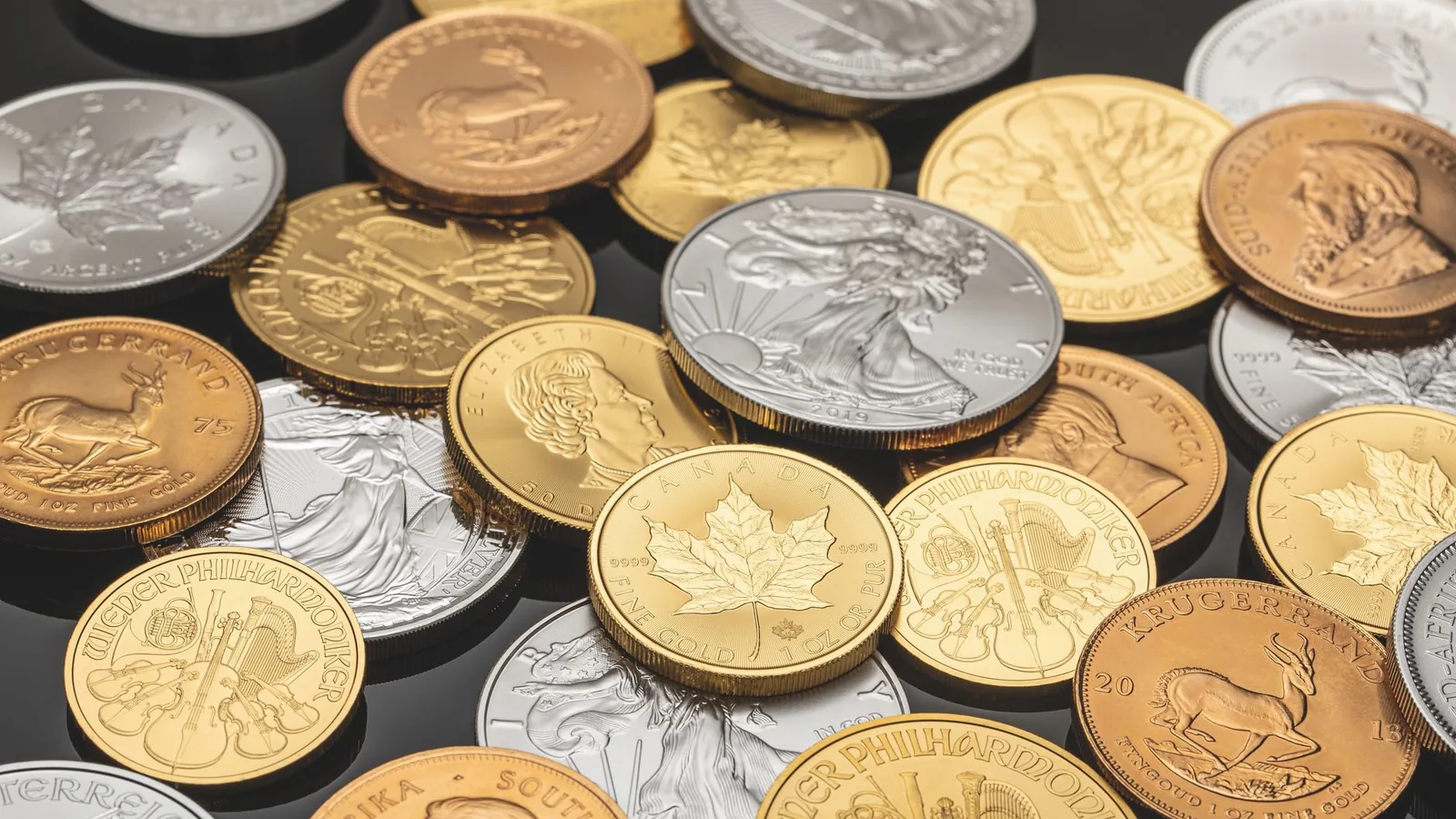
Gold gets sold as the simple asset. No earnings call, no tenant, no counterparty: just metal. The buying part is where the simplicity stops.
Two people can put $10,000 into gold on the same morning and walk away with very different positions. One holds a share that tracks the metal for a fraction of a percent a year. The other holds a coin that would fetch $8,300 if resold that afternoon. Same asset, same price, different route. This page compares all five routes on the numbers that actually change your outcome: what you pay to get in, how fast you can get out, and what the IRS takes. Companies cannot pay for placement in DollarVisor rankings, and nothing here is a recommendation to buy a specific product.
If you want the overview in one sitting first, the walkthrough below covers the routes before we get into the arithmetic.
1. What Are the 5 Ways to Invest in Gold?
Quick Answer: The five routes are physical bullion, a gold exchange-traded fund, gold mining shares, gold futures, and a self-directed gold IRA. Only two of them (the ETF and the mining shares) can be bought and sold in seconds through the ordinary brokerage account you may already have.
Every guide on how to invest in gold lists the same five doors. Almost none of them price the doors. Here is the same comparison with the cost and the exit built in, because those two columns are where beginners lose money.
| Route | What you own | How fast you can sell | Up-front cost | Who holds it |
|---|---|---|---|---|
| Physical bullion | Coins or bars you can hold | Days: find a buyer, ship or drive | Dealer spread: under 20% at some dealers, over 300% at fraudulent ones | You, or a vault you pay for |
| Gold ETF or trust | A share backed by vaulted bullion | Seconds, during market hours | Often $0 commission, plus an annual fund fee | The fund’s custodian bank |
| Mining stocks or funds | Shares in companies that dig gold | Seconds, during market hours | Often $0 commission; fund fee if pooled | Your broker |
| Gold futures | A contract to buy gold on a set date | Seconds, but opening the account takes days | Margin deposit, exchange and broker fees | Your futures broker |
| Gold IRA (self-directed) | Bullion inside a retirement account | Weeks: a custodian must sell and settle | Dealer markup, setup fee and yearly storage | An IRA custodian and a depository |
The split that matters is not paper against metal. It is priced in public against priced by a salesperson. The middle three rows have a quoted market price you can see before you commit. The first and last rows do not, and that single difference explains most bad outcomes in gold.
The rest of the routes behave like the asset classes they resemble. Mining shares are equities with a commodity attached. Futures are leveraged contracts that share a risk profile with calls and puts for beginners: small moves, big consequences. And gold sits alongside the other non-stock holdings covered across the main asset classes.
2. What Does the Dealer Spread Really Cost You?
Quick Answer: A dealer’s spread is the gap between what it sells gold for and what it buys gold back for. Whatever that spread is, gold has to rise by the same percentage before you are level. A 20 percent spread means a 20 percent rally just to break even.
This is the number almost every gold guide skips, and it is the one that decides whether physical metal works for you. The CFTC and FINRA put the honest range plainly: some fraudulent dealers have charged spreads of more than 300 percent while other dealers may charge less than 20 percent. Here is what each level does to $10,000.
| Dealer spread | Share of your $10,000 kept on day one | Same-day resale value | Gold rise needed to break even |
|---|---|---|---|
| 5% | 95% | $9,524 | 5% |
| 10% | 91% | $9,091 | 10% |
| 20% | 83% | $8,333 | 20% |
| 50% | 67% | $6,667 | 50% |
| 100% | 50% | $5,000 | 100% |
| 300% | 25% | $2,500 | 300% |
Read the last column again. At a 300 percent spread, gold would have to quadruple before the buyer got their money back. That is not a bad investment. That is a fee disguised as one.
Here is the comparison that makes it concrete. A gold ETF charging a fraction of a percent a year would need decades of fees to match what one 20 percent spread costs on day one. This is the same structural point that decides outcomes in non-traded versus listed real estate products: the entry cost, not the asset, does the damage.
Ask any dealer for the sell price and the buy-back price on the same coin, on the same call. If the second number is hard to get, you have your answer. Send us the two quotes and we will run the break-even math for you.
3. Where Is the Gold Price Actually Headed?
Quick Answer: Forecasts still point higher, but they have been cut. J.P. Morgan Global Research now expects gold to average $5,243 an ounce across 2026: 8 percent below the forecast the same team published in February 2026. Nobody knows, and the professionals revise.
Anyone deciding how to invest in gold should see how quickly a published target moves. The table below sets the June 2026 forecast against the February 2026 one from the same desk.
| Period | February 2026 forecast | June 2026 forecast | Change |
|---|---|---|---|
| 2025 (actual) | $3,440 | $3,440 | 0% |
| Q4 2025 (actual) | $4,152 | $4,152 | 0% |
| Q2 2026 | $5,530 | $4,800 | −13% |
| Q3 2026 | $5,900 | $5,300 | −10% |
| Q4 2026 | $6,300 | $6,000 | −5% |
| 2026 average | $5,708 | $5,243 | −8% |
| 2027 average | $6,550 | $6,263 | −4% |
Four months moved the mid-year number by 13 percent. That is not a criticism of the analysts: it is the honest shape of a commodity forecast. J.P. Morgan’s own metals head described gold in mid-2026 as sitting in “a bit of a technical no-man’s land”, above its 200-day average and capped below its 50-day one.
The takeaway is not to ignore forecasts. It is to size your position so that a 13 percent revision is an inconvenience rather than a problem. Traders who want to position around revisions like these generally do it with contracts rather than coins, which is a different discipline covered in our guide to calls and puts.
4. How Much Tax Will You Owe on a Gold Gain?
Quick Answer: The IRS treats gold bullion as a collectible. Long-term gains on collectibles are taxed at your ordinary rate, capped at 28 percent, not at the 0, 15 or 20 percent rates that apply to shares. Mining stocks escape this, because you are selling a company, not metal.
The IRS lists metals such as gold, silver and platinum bullion among collectibles taxed at a maximum 28 percent rate. That one line quietly changes which route wins for a high earner.
| Your situation | Rate applied | Federal tax on $10,000 | Gain you keep |
|---|---|---|---|
| Bullion and bullion-backed funds: taxed as a collectible | |||
| Ordinary rate of 12% | 12% | $1,200 | $8,800 |
| Ordinary rate of 24% | 24% | $2,400 | $7,600 |
| Ordinary rate of 32% or above | 28% (capped) | $2,800 | $7,200 |
| Gold mining shares: taxed at long-term capital gains rates | |||
| Taxable income under the 0% threshold | 0% | $0 | $10,000 |
| Most middle-income filers | 15% | $1,500 | $8,500 |
| High earners above the 15% band | 20% | $2,000 | $8,000 |
At the top end the gap is $800 per $10,000 of gain: the same metal, the same holding period, an eight percent difference in what you keep. Two ways to blunt it:
- Hold gold exposure inside a retirement account where the annual tax question does not arise.
- Own the miners instead of the metal if the tax treatment matters more to you than tracking gold exactly. You take on company risk in exchange.
Check any bullion-backed fund’s own tax disclosure before assuming its treatment. Structures differ, and the fund states its position in its filings. Tax treatment varies this widely across the main asset classes too, which is why the account you hold something in often matters as much as the thing itself.
5. Is a Gold IRA Ever Worth It?
Quick Answer: Rarely, and almost never when the idea arrives by cold call. Federal regulators report that some gold and silver IRA fraud victims lost one-third to one-half of their savings to markups, fees and commissions alone: before the gold price did anything at all.
This is where a question about how to invest in gold turns into a consumer-protection question. The CFTC, FINRA and NASAA launched a joint warning to retirees in March 2024 for a reason. Their findings, in their words:
- The scale is not small. Over the past decade the CFTC has charged numerous firms with selling overpriced precious metals, for an alleged total of more than $500 million in fraudulent sales.
- The losses are structural, not market-driven. Victims lost one-third to one-half of their savings to markups, fees and commissions.
- Retail metal dealers are not federally regulated. The CFTC says so directly, and recommends checking a dealer against your state attorney general or securities regulator.
- The salesperson usually is not qualified. In most cases, the CFTC notes, the person pitching a rollover has no professional experience and is not registered to give investment advice.
The self-directed structure is the weak point. The SEC, FINRA and NASAA warn that fraudsters may be more likely to exploit self-directed IRAs, because their custodians typically do not investigate the assets or the promoter’s background. Nobody is checking the price you paid.
None of this makes gold inside a retirement account impossible. It makes the physical version expensive and slow. A gold fund held in an ordinary IRA gives you the same price exposure, with a visible quote and a same-day exit, and it slots in beside everything else in the portfolio without a custodian in the middle.
Send us the fee schedule before you sign anything. We will total the setup, markup and yearly storage and tell you what the metal has to do just to get you level. Have us read the paperwork.
6. How to Buy Gold in Five Steps
Quick Answer: Decide the job gold is doing, pick the route, set the dollar amount before you look at any price, get the buy-back quote in writing if you are buying metal, and settle where it will be stored. Five steps, well under an hour.
Most bad gold purchases come from doing these in the wrong order: picking a coin first and working backwards. The route you choose sits alongside every other holding you own, which is why how the asset classes fit together is the right place to start.
- Name the job. Hedge against a falling dollar? Diversify away from stocks? A store of value you can carry? Each answer points at a different route.
- Pick the route from the job. Price exposure with a same-day exit points to a fund. Wanting the metal in your hand points to bullion, with the spread you saw above.
- Set the dollar amount first. Write down a figure that could fall by a third without changing your plans, and buy that much. Do this before you look at a chart.
- Get both quotes if you are buying metal. Ask the dealer what it sells the coin for and what it buys it back for today. Check its record with your state attorney general.
- Settle storage before delivery. A home safe, a bank box or a paid vault: each has a cost and a risk. Check whether your homeowners policy covers bullion at all; most limit it sharply, and the coverage each policy type actually provides is worth reading before the metal arrives.
Steps four and five do not apply to the fund routes. That is the whole argument for them.
7. How Much Gold Should You Actually Own?
Quick Answer: There is no official number, and anyone quoting one with confidence is guessing. What can be said plainly: gold pays no income, so every dollar in gold is a dollar not earning a dividend, a coupon or rent.
Useful context comes from the buyers who actually move this market. Chinese insurers were cleared in early 2025 to put up to 1 percent of assets under management into physical gold. That is a ceiling, not a target, and it was set by institutions with far more analytical firepower than any household.
Two facts should shape your own number:
- Gold produces nothing. Its entire return is the next buyer paying more. Compare that with the rent-backed income behind a beginner’s REIT position, where the cash flow arrives whether or not the price moves.
- It moves hard in both directions. A metal that can be revised down 13 percent in a single quarterly forecast can fall that far in reality too.
Which is why the sizing question beats the route question. A sensible allocation bought through a mediocre route usually beats an oversized one bought perfectly.
8. The Verdict: Which Route Fits You?
Quick Answer: For most people the gold ETF wins on cost and exit speed. Bullion earns its place only if holding the metal is the point and you have a written buy-back quote. Futures suit experienced traders. Gold IRAs are the route we would take last.
Our read on how to invest in gold, ranked by how many people each route actually suits:
- Gold ETF or trust: our pick for most people. Visible price, same-day exit, no storage question. Check the tax treatment in the fund’s own disclosure.
- Mining shares: for the tax-sensitive. Long-term capital gains rates instead of the 28 percent collectible cap, in exchange for company risk.
- Physical bullion: only with the spread in writing. If holding the metal is the entire point, get both quotes and store it properly.
- Futures: for experienced traders only. Leverage cuts both ways and the account is not opened casually.
- Gold IRA: last, and only unsolicited. The fee stack and the regulator warnings put this at the bottom.
The order changes if your priority changes, but the discipline does not: price the entry, know the exit, size it small. That is the same test we apply across every asset class we cover.
Not sure which of the five fits your situation?
Tell us your tax bracket, your state and whether this is going in a taxable or retirement account. We will show you the after-tax difference between the routes on the exact amount you are thinking of putting in.
9. Frequently Asked Questions
How much money do I need to start investing in gold?
One share of a gold fund, and many brokers accept fractional orders, so a few dollars can work. Physical bullion starts at roughly the price of one coin. Gold IRAs usually demand the most, because the custodian and storage fees only make sense on a larger balance.
Is physical gold better than a gold ETF?
Only if holding the metal is the point. On cost and exit speed the fund wins clearly: a dealer spread of 20 percent costs more on day one than years of a fund’s annual fee. Physical gold also brings storage and insurance questions a fund does not.
How is gold taxed when I sell it?
The IRS treats bullion as a collectible, so long-term gains are taxed at your ordinary rate up to a 28 percent maximum, rather than the 0, 15 or 20 percent rates on shares. Mining stocks are taxed at the normal capital gains rates.
Are gold IRAs a scam?
The structure is legal; the sales practices around it draw repeated federal warnings. The CFTC reports that some victims lost one-third to one-half of their savings to markups and fees. An unsolicited pitch is the single strongest warning sign.
Does gold protect against inflation?
It is bought as a hedge against a currency losing purchasing power, and that demand is real. But gold pays no yield, so it tends to struggle when safer assets start paying more. It is a hedge, not a guarantee.
Can I hold gold in a regular IRA or 401(k)?
You can generally hold gold funds in an ordinary IRA or a workplace plan that offers them, which is the simplest route to gold exposure inside a retirement account. Holding physical bullion requires a self-directed IRA with a custodian and a depository.
This page is information, not financial or tax advice. Prices, forecasts and tax rules change. See our disclaimer.